



College of Saint Mary students put forensic science skills to the test at mock crime scene
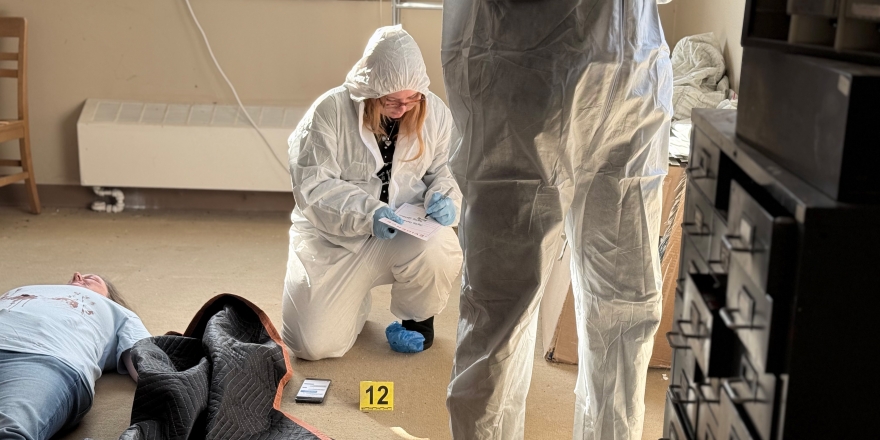
OMAHA, Neb. – Wearing white hazmat suits, students entered an empty apartment ready to collect evidence from the crime scene.
The crime scene investigation was the final exam for students taking a forensic science class at College of Saint Mary (CSM).
“Having an interactive final exam requires the students to use all of the skills they practiced throughout the semester at one time,” said Amanda Roe, assistant dean of sciences and professional studies and director of the forensic science minor. “Students gain an understanding of how many people are involved in crime scene investigations and why teamwork is important. This type of final is also more fun for students.”
The final exam took place in an empty apartment located in the Baright Art Studio on campus. Psychology professor Molly Mahoney acted as the victim of the crime. Students had to document and collect evidence at the crime scene then find suspects on campus to collect their fingerprints and DNA.
“After communicating with my team and deciding on a suspect, we came and collected some fingerprints. It really just shows how communication is essential in forensics. It was a great class,” said Blanca Guevara-Rangel, a student in the class.
In the introductory class, students learn the foundations of forensic science—crime scene investigation, the ethics of forensic science and the different types of evidence. Throughout the semester, students learn how to identify, document, collect and analyze evidence, such as fingerprints, bloodstains, insects and bones.
The interactive final exam is a culmination of all of the content the students learned throughout the semester.
The Bachelor of Science in Biology with an emphasis in forensic science equips students with the scientific expertise and investigative skills to uncover the truth. Students study biology, chemistry, forensic psychology and law, gaining the tools to investigate crimes, analyze evidence and understand how science supports the justice system.
Graduates are prepared for roles such as, forensic lab assistant or technician, crime scene technician or evidence specialist, law enforcement support, medical examiner’s assistant and other legal or criminal justice support positions. Many students choose to continue their education to become forensic scientists, DNA analysts or toxicologists.